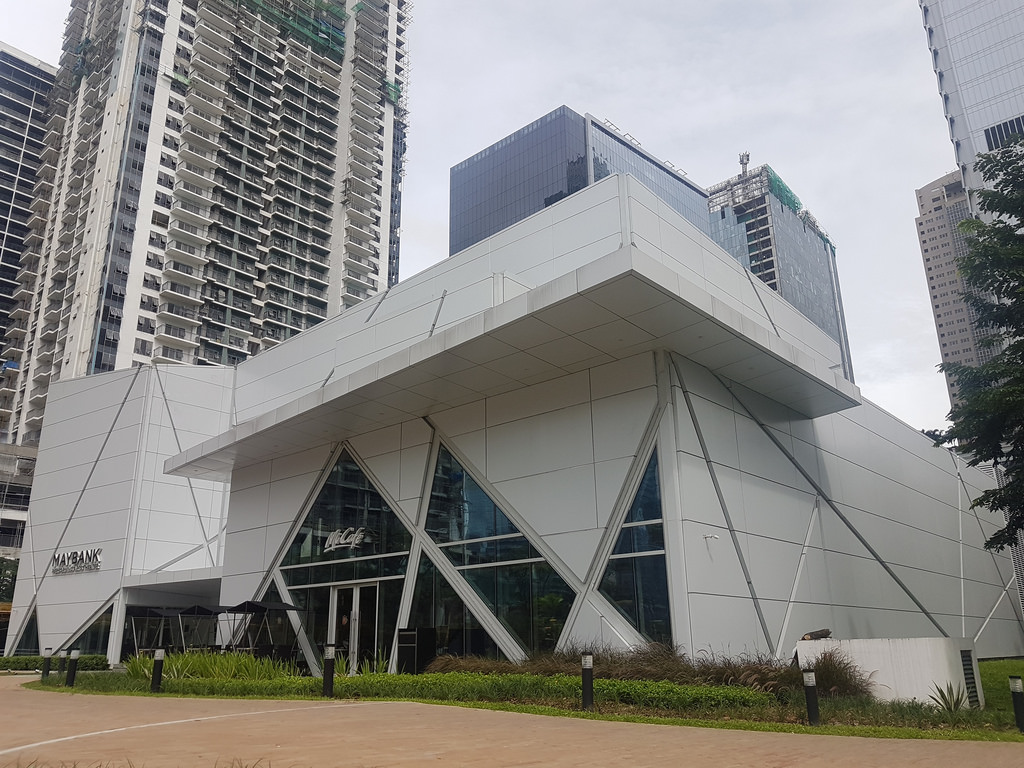
With so many skyscrapers currently standing and soon to be standing at the Bonifacio Global City commercial and business district, it is to forget that BGC has quite a few surprises to offer. One of them: an arts and culture hub in the middle of this busy district.
While this hub is not as massive as venues like the Cultural Center of the Philippines, the BGC Arts Center fills the need for a place in this part of the concrete urban jungle where the humanities can thrive and be appreciated by a people who need some respite from the madness of urban living.
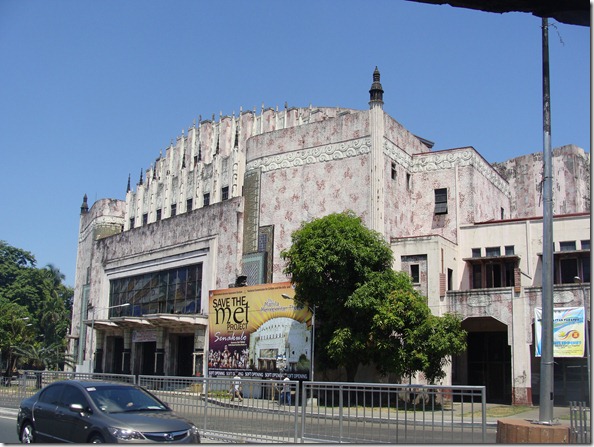
It has been a long while since I written something about the Metropolitan Theater, about five years to be exact since the last update. Time does fly so quickly and so many things have happened since then. Unfortunately, the same thing cannot be said for the Met as it remained in a dormant state throughout this time, with the earlier promise of what was supposed to be a start of a reviving this storied structure was stalled for some reason.
However, the Met figured in the news recently as its ownership passed hands from its previous owner, the Government Service Insurance System (GSIS) to the new owner, none other than the National Commission for Culture and the Arts (NCCA) for P270 million, a deal that was done last June 10. It was move by the NCCA in its bid to finally kickstart the rehabilitation of this historic structure.
On the occasion of the National Arts Month, I thought it would be fitting to close out this month with a little tribute to our country’s arts and cultural center: a landmark aptly titled the Cultural Center of the Philippines or the CCP.
Technically, the Cultural Center of the Philippines (in Filipino, Sentrong Pangkultura ng Pilipinas) or CCP refers to the body created in 1966 by virtue of Executive Order 30 as a “trust for..the Filipino people for…preserving and promoting Philippine culture.” But for many people, it will always be identified with its iconic building known formally as the Tanghalang Pambansa (known more as the CCP Main Building or the Theater for Performing Arts) along Roxas Boulevard which was completed 3 years later, on September 8, 1969.
the logo of the CCP formed by 3 K’s written in Baybayin script standing for katotohanan, (truth) kagandahan, (beauty) and kabutihan. (goodness)
It was a milestone for the brains behind the building of this edifice, then First Lady Imelda Marcos, who was able to realize her dream of a larger, grander venue for the Philippine arts that can meet the needs its predecessors the Manila Metropolitan Theater and the FEU Theater have failed to address. With the praise the newly-inaugurated CCP building was getting internationally, it was an encouragement of sorts for Imelda to continue realizing her dream of a “beautiful Philippines” through her innate “edifice complex,” as some call it.
I know it has been a little over than a month since my last visit to the Manila Metropolitan Theater. In normal circumstances, you would not expect much to happen in an on-going rehabilitation effort like this one, considering the time involved in doing this work.
But when politics and PR blitz is involved, you can expect things to go a bit faster than expected.