The Arches of Manila Chinatown

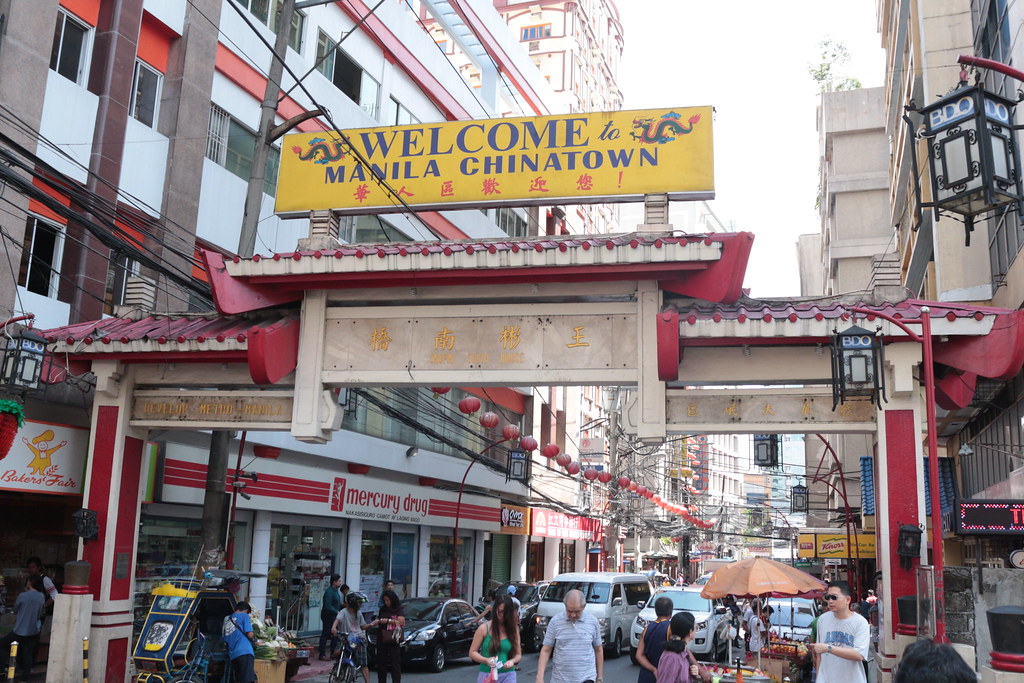
The last Araw ng Maynila was an occasion to formally inaugurate the new Manila Chinatown arch located in Plaza Moraga at the foot of Jones Bridge in Binondo, Manila. It is said to be the world’s largest Chinatown arch at 63.8 feet high and 74 feet wide (1.62 meters high and 1.88 meters wide if you prefer the metric system) and was installed as part of an effort for tourism and the revitalization of Chinatown and the city in general, which has been the cornerstone of the administration of former president turned city mayor Joseph Estrada.

Nevertheless, not everyone is thrilled to have it, even the Filipino-Chinese community in the city, mainly because of the inscription in the arch. The Chinese characters on the arch are rendered in Pinyin as “zhong guo zheng“, meaning literally “China Town.” Take note, China Town and not Chinatown, so this part of Manila is being implied in this inscription as an outpost of China. And we all know how cordial the relations are right now between the Philippines and China.

Read more

Viva Manila: Luneta Hotel Reborn

This is the 4th part of a series covering Carlos Celdran’s Viva Manila tour. Click here for Part 1, Part 2, and Part 3

One of the stops of the Carlos Celdran Viva Manila tour was a visit to a historic hotel near Rizal Park that is not the Manila Hotel. I am of course talking about the Luneta Hotel which first opened in 1918.

Designed in the French renaissance style by Spanish architect Salvador Farre, the hotel with its charm and elegance, rivaled the Manila Hotel as a popular place of stay among guests, especially notable ones like dignitaries, elite, and marine merchant personnel. Dwight D. Eisenhower, during his stint in the country as aide to Gen. Douglas MacArthur, also stayed in this hotel and had good memories of it.  It also served as the hotel for the delegates of an international meet that was the XXXIII International Eucharistic Congress in 1937.

Read more

Viva Manila: Manila’s Art Deco Hotel

This is the 3rd part of a series covering Carlos Celdran’s Viva Manila tour. Click here for Part 1 and here for Part 2.

There are, sad to say, only a few hotels from the prewar years that have managed to survive and serve as living monuments to a bygone glorious era that we had. One of them was part of the itinerary of the recent Carlos Celdran Viva Manila tour.

Meet the Miramar Hotel, a hotel built in the Art Deco style of architecture built in the 1930s. As one can see, the hotel has done a good job preserving many of its original elements to be appreciated by generations of guests and travelers alike.

Read more

Viva Manila!: A Bakeshop with a Dolphy Connection (And Some Sidelights Along the Way)

This entry is part of the Viva Manila series inspired by the tour of Carlos Celdran. If you haven’t caught up with Part 1, click here

Our Viva Manila walking tour adventure continues as we proceeded to our next stop, Hizon’s Cakes and Pastries along J. Bocobo Street in Ermita, one of the few remaining old dining places in Ermita.

From its humble beginnings in 1946 as a bakeshop located along Raon (now Gonzalo Puyat) Street in Quiapo, Hizon’s grew as a beloved brand in its reputation thanks to its pastries, particularly their big and fluffy ensaymada which became synonymous with the bakeshop itself. One of its growing number of loyal customers happens to be a budding theater and film actor Rodolfo V. Quizon, who we better know as Dolphy.

Read more