There are questions that are not asked often but never fail to make heads scratch whenever they are asked. One of them being “how did this place get its name?”
Today, we will attempt to answer this question with regards to the origins behind the names of the cities and town (yes, as in one town) that comprise Metropolitan Manila. Some of the information that will be shared here may be of common knowledge to some, but it is still worth knowing. Who knows, you may be asked about in in a game show or something. 😉
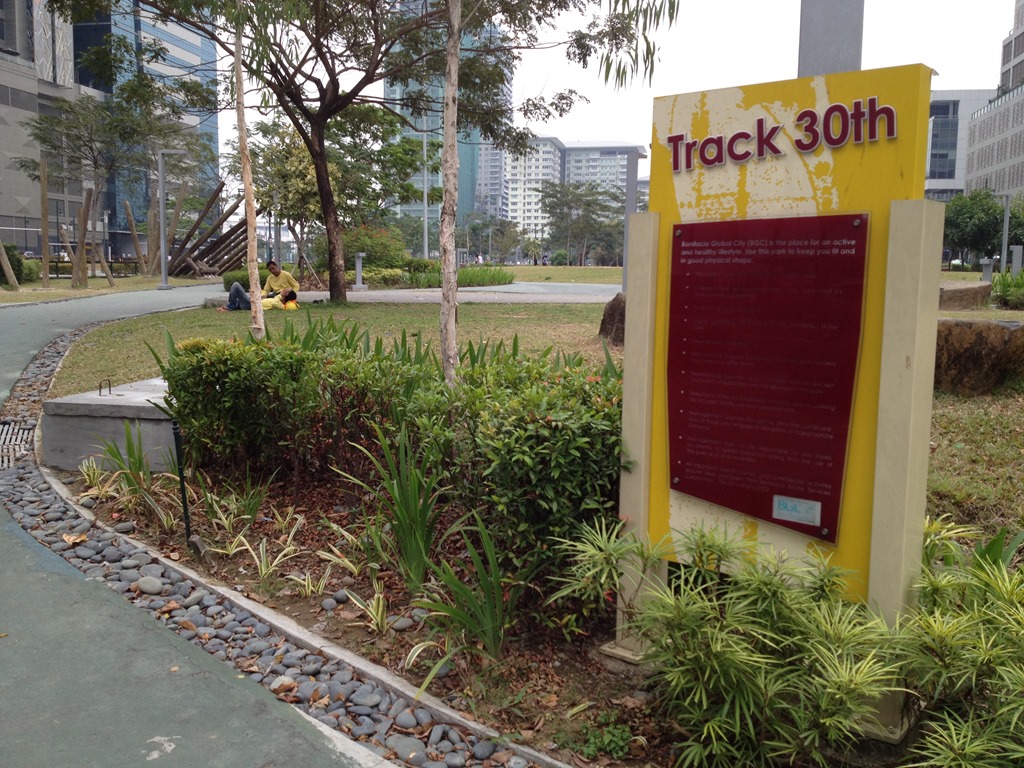
Talking about a playground in the middle of the concrete jungle which happens to be a major metropolitan commercial-business district is a sight as rare as a blue moon. But in the bustling Bonifacio Global City, (BGC) one can actually find such a sight within the green, open space called Terra 28th.
One : of the perils of urbanization is the shrinking area being left available for open, green spaces where one can keep fit, unwind, or do whatever that you cannot afford to do in cramped concrete spaces. Unfortunately, some urban planners and developers tend to forget this aspect when they make their masterplans, thus denying these places of some breathing space.
Fortunately, it is not all a bleak scenario out there. Let this entry cite one such example, found in the midst of the bustling and ever-growing commercial-business district of Bonifacio Global City located in Taguig. (for now at least)
It is that time of the year once again to remember all things and frightening. For this year, the Urban Roamer headed down south in that wide and bitterly contested Fort Bonifacio area to visit one of the most prominent burial places in the metropolis and the country as a whole. Yes, today we visit the Libingan Ng Mga Bayani, ibingwhich literally means the burial ground of heroes.
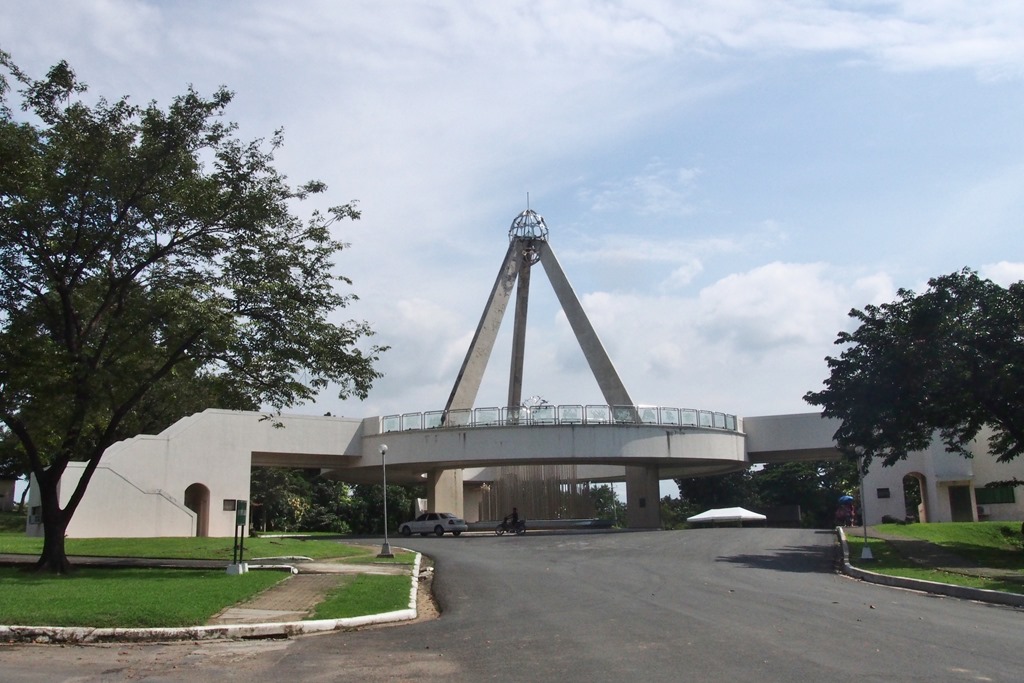
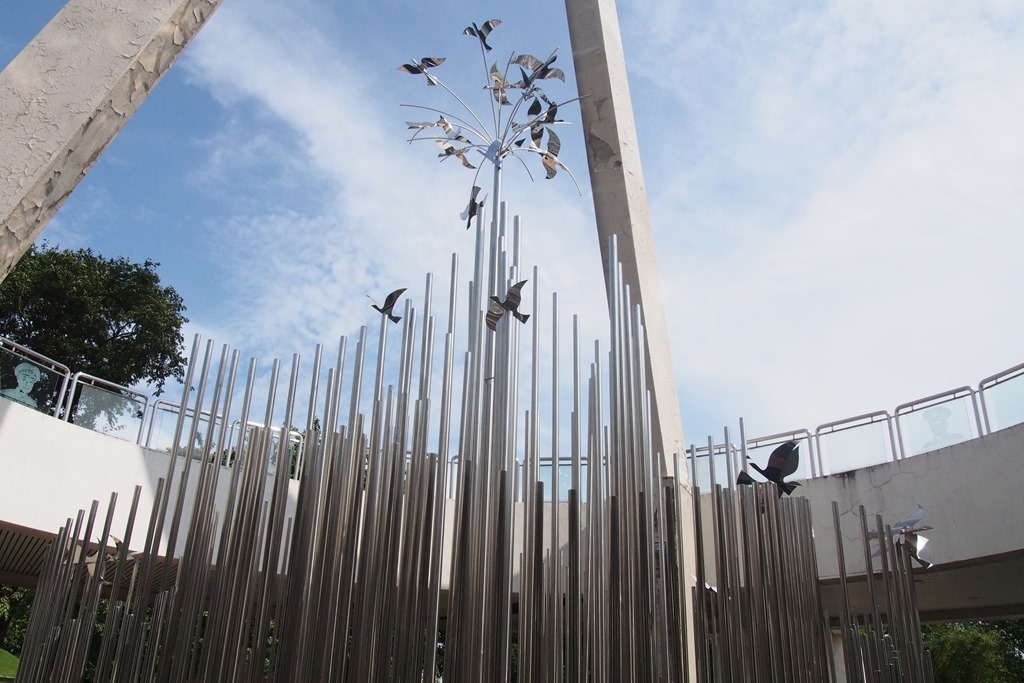
Heroes Memorial Gate at the entrance to the Libingan Ng Mga Bayani, which has a metal sculpture at its center and a viewdeck which bears images from the country’s history, especially military history
Its origins can be traced back in May 1947, when the Republic Memorial Cemetery was established in what was then known as Fort McKinley to serve as a final resting place that would honor the men and women who have served the country well, particularly the ones who have served during World War II as well as those in the military service. Then in 1954, President Ramon Magsaysay renamed the cemetery to the name we know today as the “Libingan Ng Mga Bayani.” It was further expanded in area and given more prominence in 1967 by President Ferdinand Marcos as it was elevated to become a national shrine for the country’s heroes, whether they served in military or not.