Manila’s “Maharnilad” : the Manila City Hall

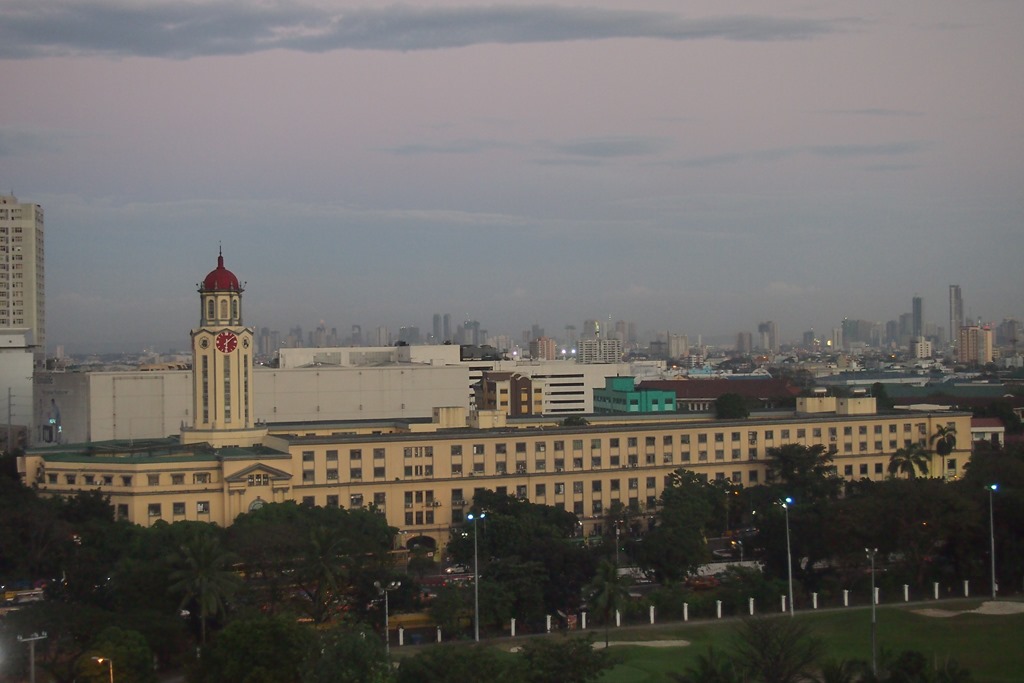
Despite the rise of more modern, taller “city halls” with more modern amenities, especially the city halls of some of the cities in the metropolis, there is this certain appeal and charm whenever one sees the city hall building of Manila. Maybe it’s partly because it is the city hall of the nation’s capital city. Maybe it’s because of its classic architecture that it has been able to maintain. Whatever the case may be, the Manila City Hall is itself an iconic structure that has managed to become the symbol of the city it represents, something that not all local government office buildings have managed to achieve.
P2020083

The city hall we see today was first constructed in the late 1930s during the Commonwealth period, a product of a campaign by then Mayor Juan Posadas for Manila to have a new city hall building. The 4-storey structure was built in the neoclassical style architecture designed by Antonio Toledo, who also helped design other neoclassical structures along with Juan Arellano the present National Museum building, the provincial capitol buildings of Cebu and Leyte, among others. It was inaugurated in 1939 by President Manuel Quezon, albeit only the southern portion was fully completed by then. It would take another 2 years for the building to be fully completed. By that time, Mayor Posadas, the one behind the building of the Manila City Hall already died in office. (he died in 1939, shortly after the inauguration) The building suffered some damage due to shelling in the Battle of Manila in 1945 but was reconstructed after the war, faithful to the original architecture of the building.
Read more

The SkyDeck at Bayleaf Hotel

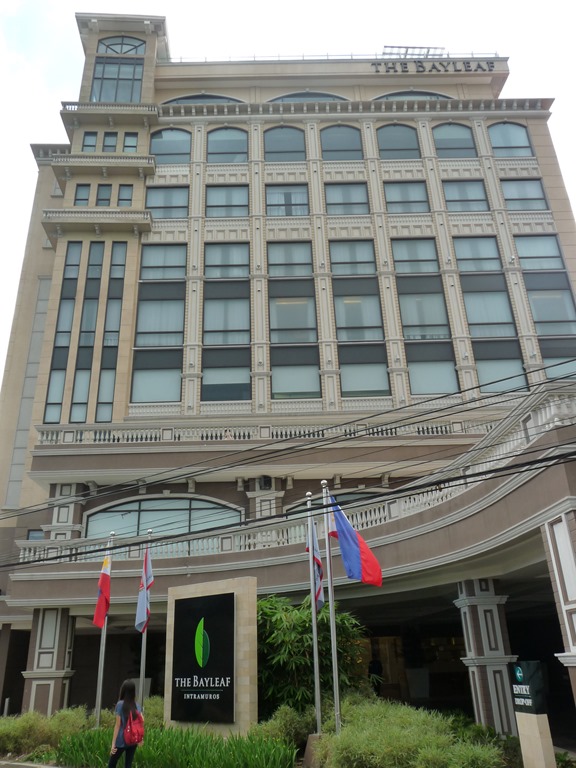
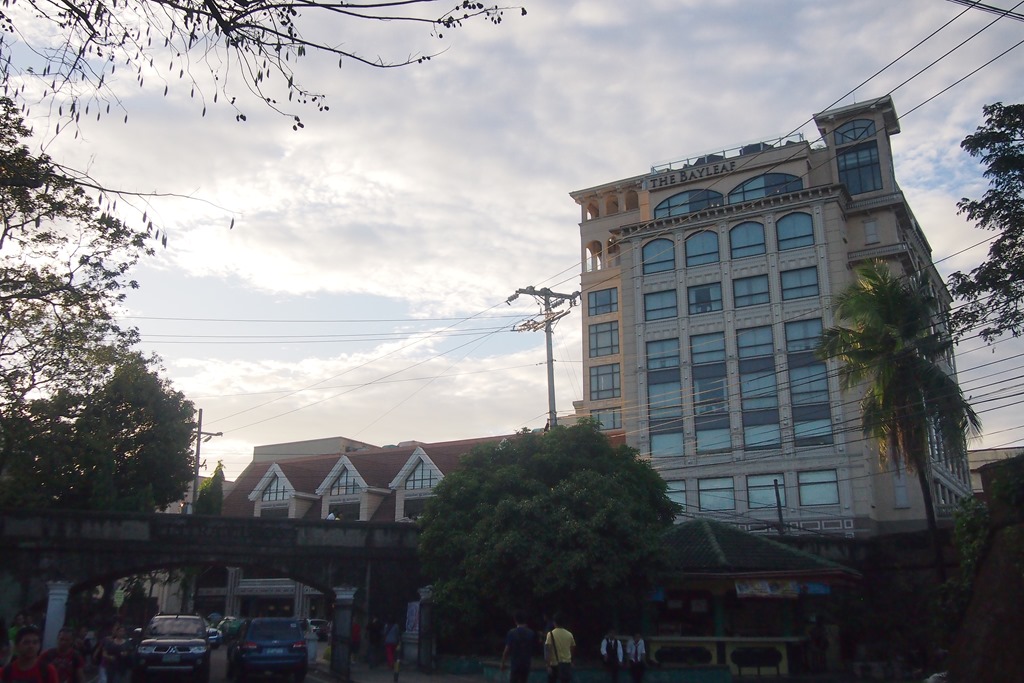
Despite being a popular tourist destination, it’s interesting to note that there are only a few hotels, well 2 to be precise, operating in Intramuros itself. Make no mistake though, these hotels have their own unique charms that make them stand out. I wrote about one of them in a previous entry which operate an electric chariot tour. And there’s the “new kid in town,” so to speak, called The Bayleaf.

P1140838

P2020055

Opened in November 2011, The Bayleaf was named after the other name for the laurel, which is a nameplay as well to the Laurel family who own and operate this hotel along with the nearby Lyceum of the Philippines University. (this would also explain the presence of a Lyceum culinary school in the hotel as well) In many ways, the hotel strives to blend the old and new as it combined modern elements in its interiors with the Walled City’s distinct Spanish-era charm.

Read more

The Jai Alai in Manila

It has been called “the game of a thousand thrills.” Being a bit familiar with the sport, it boggles why the game of jai alai as been dubbed as such when other sports like basketball or football can also lay claim to that tag. Nevertheless, Filipinos seem to have such an understated love affair with this game, overshadowed as it is these days due to the popularity of the aforementioned sports.

jai alai (from the web)

Being a sport of Basque origin, (jai alai means “happy feast” in the Basque language) it was fitting that the Basques, or at least Hispanics with Basque heritage, would introduce this sport in the country. Some accounts relate that jai alai made its way into the country in 1899 courtesy of the prominent Elizalde family, themselves having Basque lineage, who many today would know as the ones behind one the country’s prominent broadcasters that is the Manila Broadcasting Company.

Over the years, the jai alai sport has become popular not only among the elite but among the common folk as well. Soon, Spanish (mostly Basque) players were being imported to play jai alai in the country. Its popularity began to outgrow the confines of the small fronton in Casino Español, and a new, larger venue was needed.

Read more

Reminiscing the cinematic glitter: the old movie theaters of downtown Manila (Final part: south Santa Cruz and Binondo)

At the height of the glory days of downtown Manila, movie theaters were sprouting not only along Rizal Avenue but also in nearby streets as well in the downtown area as a whole.

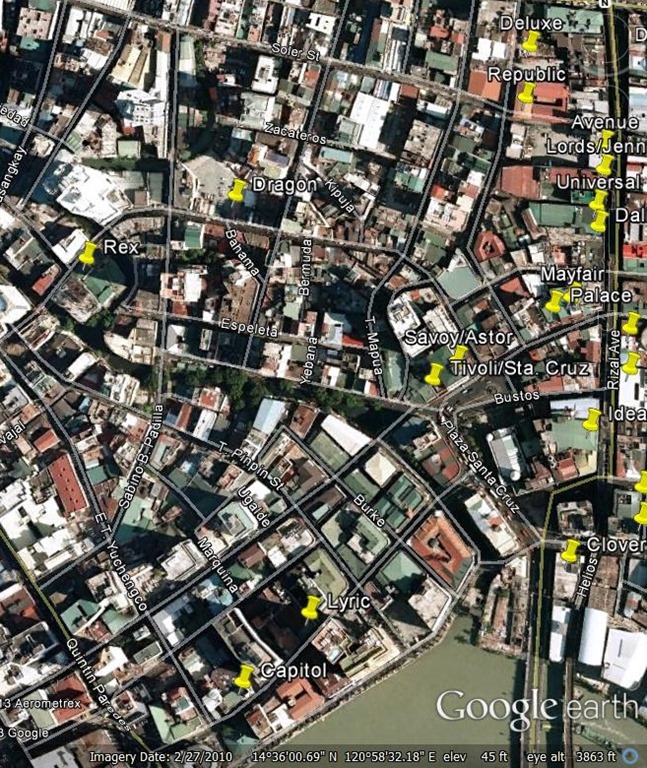
Binondo-Sta Cruz theaters

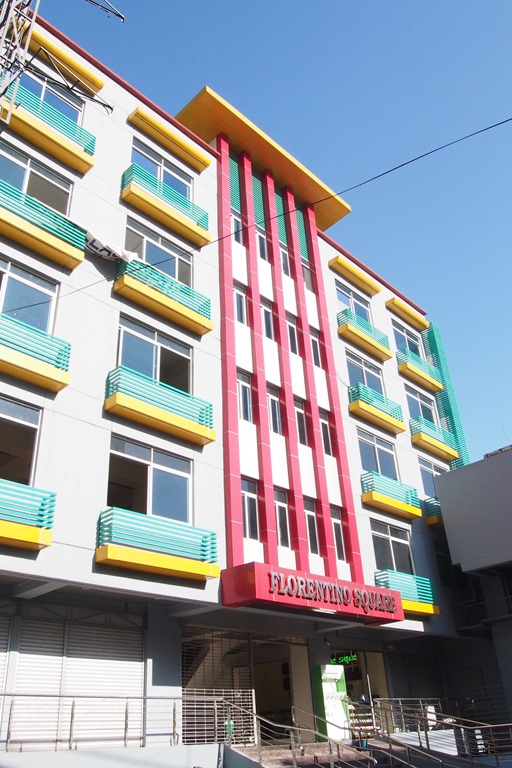
One such street, Florentino Torres, which ran perpendicular to Rizal Avenue was once home to two prominent movie theaters, the Deluxe and Republic theaters. Republic was no longer standing by the 1990s as a commercial building that bears its name stands today. Deluxe, which was a landmark in itself in its twilight years thanks in part to its proximity to Ambos Mundos Restaurant, was gone during the mid-2000s and a modern-looking commercial building now stands in its place as well.

P3310025
the former Deluxe Theater

Read more