Reminiscing the cinematic glitter: the old movie theaters of downtown Manila (Part IV: at Avenida south of Recto)

If New York City has a Broadway and its stretch of theaters, Manila had (take note foks, it’s “had”) Rizal Avenue or Avenida Rizal (nicknamed Avenida) with its strip of movie theaters. It was also a pretty long strip that ran from Blumentritt up north all the way down to Plaza Lacson. (or Plaza Goiti as it was called in the old days) One can imagine what the avenue looked like in its heyday, seeing a long stretch of neon signs, especially of movie theaters that lighted up the way. Being the movie theater hub of Manila back then, Avenida was also home to some of the most prominent movie theater structures one can find in the city, designed by some of the country’s most renowned architects of that period.
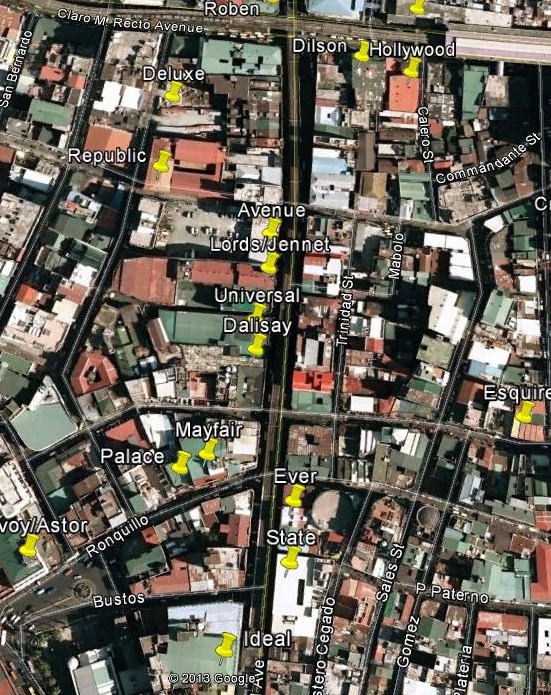
South Avenida theaters

One of those prominent theaters was Avenue, designed by National Artist Juan Nakpil in the 1930s. This art deco theater used to be the exclusive home for films of Paramount Pictures. After falling into hard times in recent years, the theater was demolished in 2006 to give way to a parking lot cum bar and commercial space, something that has been met with public outcry and condemnation.
Read more

Reminiscing the cinematic glitter: the old movie theaters of downtown Manila (Part III: along Recto Avenue)

Claro M. Recto Avenue in Manila is an interesting thoroughfare in that it has served to link Manila’s educational and commercial hubs. As such, the area around that road formerly known as Calle Azcarraga is an area of bustling activity.that has made it a prominent Manila thoroughfare through the years.

Recto theaters
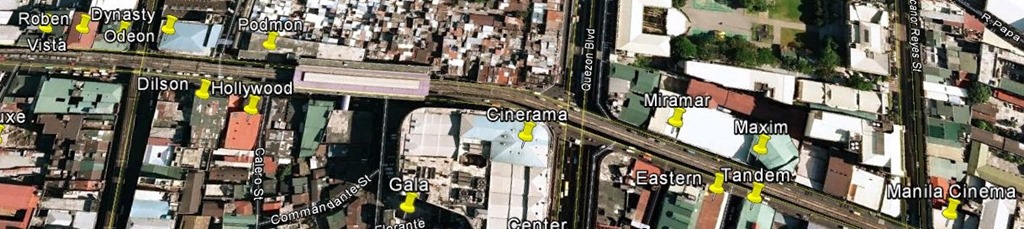
the Urban Roamer’s map of the Recto movie theaters through Google Earth. this is not considered authoritative. also, there is a movie theater not included in this map, U-Belt Theater as there is no documentation found yet as to its approximate location.

There were about a dozen or so movie theaters that used to stand along this stretch of the road. Around the University Belt side of Recto alone, there were the Manila Cinema and U-Belt Cinema, (which I don’t know what sites they are now) as well as the “big four” of the U-Belt Recto area which happen to be all located close to each other, Miramar and Maxim along the westbound side and Eastern and Tandem right across them. There were other movie theaters in Recto’s U-Belt area as well like the Manila Cinema and the U-Belt Cinema as well.

Read more

Reminiscing the cinematic glitter: the old movie theaters of downtown Manila (Part I- an introduction)

Before came the blight, there was the bright. The bright that shone from the dozens of neon signages that illuminated the cityscape which was downtown Manila. For the people who lived in those bygone days, those neon signs were a form of welcome, a respite from those day-to-day struggles or whatever issue of the day that was bothering them.

from Flickr: Rizal Avenue in the 1950s. note some of the movie theaters that used to stand there

The bright lights would lead them right into a movie theater where they can enjoy the latest movie released in town. Or it could be a comedy act or some performer who will be having a show for that day. Yup, some of those theaters serve a dual purpose as well.

From the early 20th century up until the 1970’s, downtown Manila was home to dozens of movie theaters that made it become the entertainment hub of sorts of the city. Unlike what it is today, each movie theater has something different to offer in an effort to stand out and beat the competition, so to speak. Some would hire the best architects of the day like Juan Nakpil or Pablo Antonio to design their theaters. Some would make arrangements to make their theater become the exclusive venue for movie studios, both local and foreign, to show their films. One can imagine how vibrant and cut-throat the business was back in the day.

Read more

Roaming the Manila North Cemetery

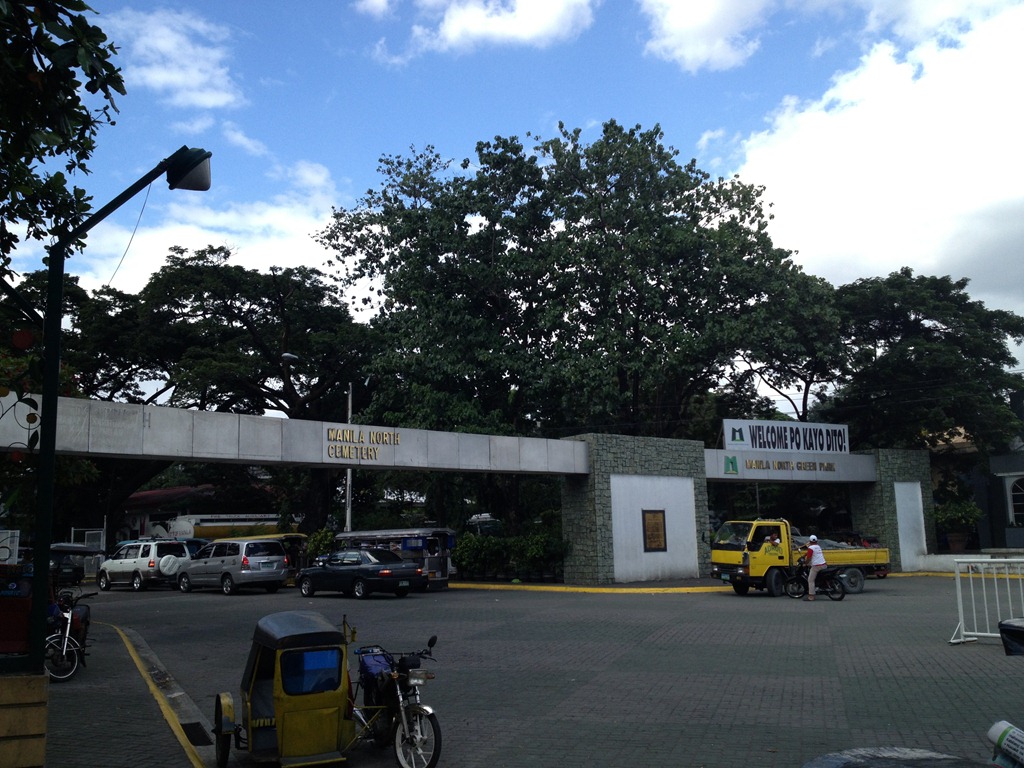
It’s that time of the year once again when the Urban Roamer embarks on a different roaming adventure to visit not a place for the living, but a place for the departed ones. This time, it is a privilege for me to finally get the opportunity to visit the largest public cemetery in Metro Manila today: none other than the Manila North Cemetery.

IMG_0948

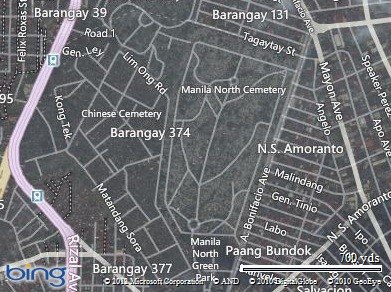
Originally, the Manila North Cemetery was part of a bigger cemetery complex owned by the Roman Catholic Archdiocese of Manila that included what are now the La Loma Cemetery and the Chinese Cemetery. After the allocation of the property to the Chinese community in Manila for the building of their own cemetery, 54 hectares was parceled off from the original property for use as a public cemetery, a cemetery that will be open for anyone who wishes to be buried there, regardless of religious or ethnic background. (in contrast to the aforementioned cemeteries that were already in operation at the time) By 1904, with the American government set firmly in place in Manila, and the Philippines in general, the cemetery which was also known before as the “Cementerio del Norte” was opened.

Map picture

Read more