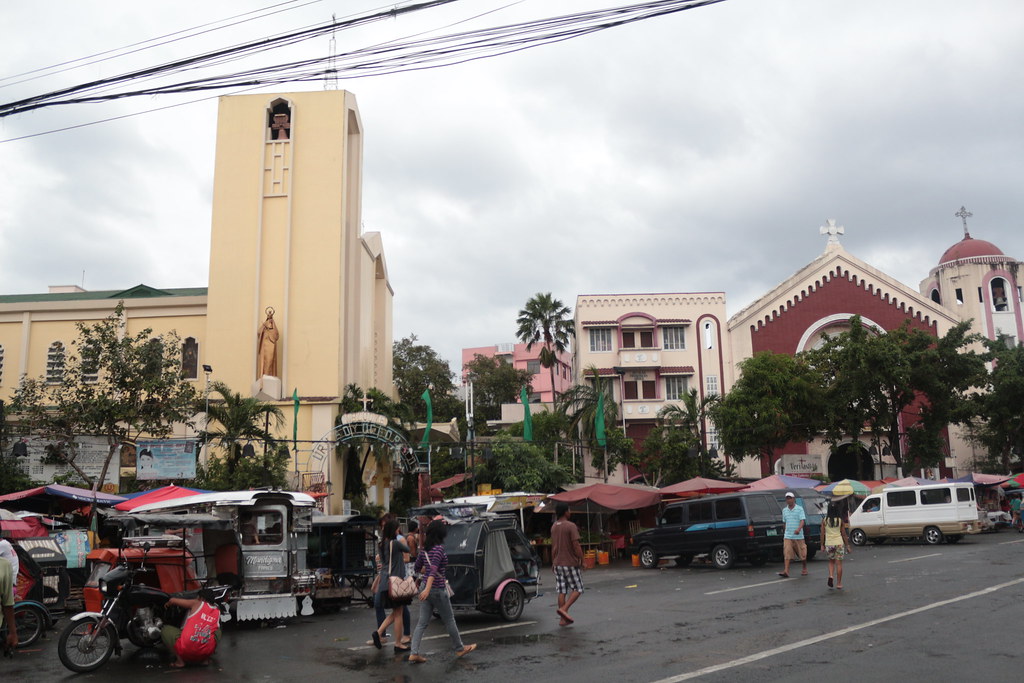
The district of Sampaloc in the City of Manila has long been known not only as a bustling residential enclave but also an important educational center of the city and of the metropolis as a whole. But at the heart of this busy district is a spiritual core that is common among many communities in the country. What makes Sampaloc’s case a bit different though is that its spiritual core is served not only by one but two Catholic churches with an intertwined history that has shaped the suburb we know of today.
Sampaloc
Reminiscing the cinematic glitter: the old movie theaters of downtown Manila (Part III: along Recto Avenue)
Claro M. Recto Avenue in Manila is an interesting thoroughfare in that it has served to link Manila’s educational and commercial hubs. As such, the area around that road formerly known as Calle Azcarraga is an area of bustling activity.that has made it a prominent Manila thoroughfare through the years.

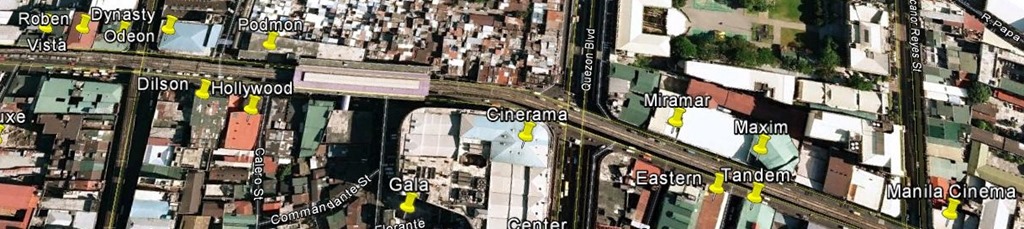
There were about a dozen or so movie theaters that used to stand along this stretch of the road. Around the University Belt side of Recto alone, there were the Manila Cinema and U-Belt Cinema, (which I don’t know what sites they are now) as well as the “big four” of the U-Belt Recto area which happen to be all located close to each other, Miramar and Maxim along the westbound side and Eastern and Tandem right across them. There were other movie theaters in Recto’s U-Belt area as well like the Manila Cinema and the U-Belt Cinema as well.
Reminiscing the cinematic glitter: the old movie theaters of downtown Manila (Part I- an introduction)
Before came the blight, there was the bright. The bright that shone from the dozens of neon signages that illuminated the cityscape which was downtown Manila. For the people who lived in those bygone days, those neon signs were a form of welcome, a respite from those day-to-day struggles or whatever issue of the day that was bothering them.

The bright lights would lead them right into a movie theater where they can enjoy the latest movie released in town. Or it could be a comedy act or some performer who will be having a show for that day. Yup, some of those theaters serve a dual purpose as well.
From the early 20th century up until the 1970’s, downtown Manila was home to dozens of movie theaters that made it become the entertainment hub of sorts of the city. Unlike what it is today, each movie theater has something different to offer in an effort to stand out and beat the competition, so to speak. Some would hire the best architects of the day like Juan Nakpil or Pablo Antonio to design their theaters. Some would make arrangements to make their theater become the exclusive venue for movie studios, both local and foreign, to show their films. One can imagine how vibrant and cut-throat the business was back in the day.
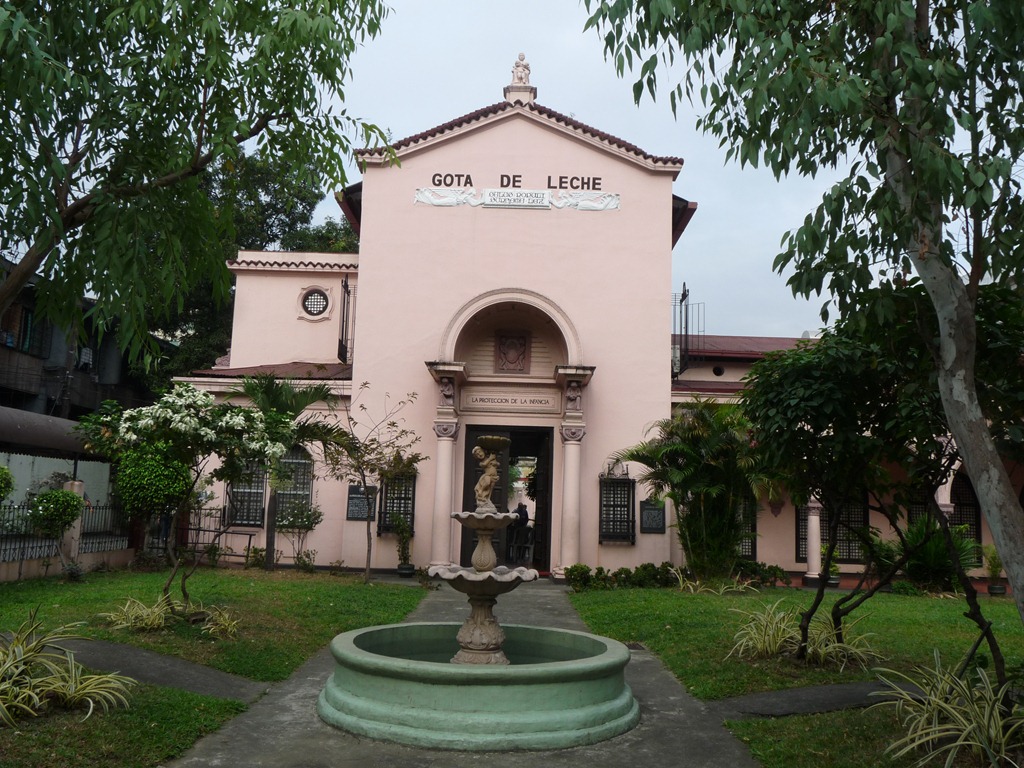
The Gota de Leche of Sampaloc
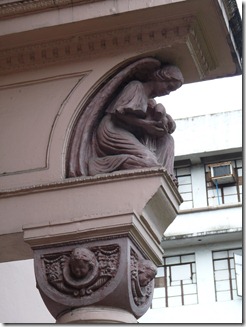
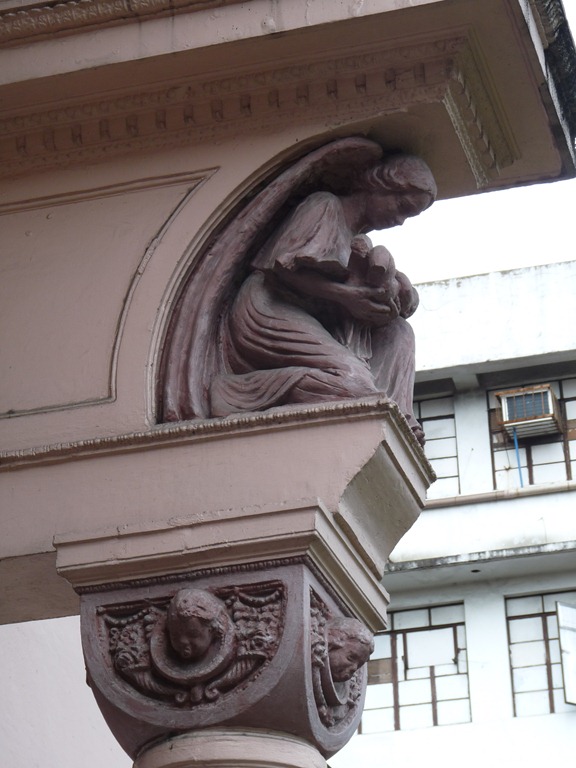
If you find yourself somewhere in the middle of Manila’s “University Belt” in Sampaloc disttrict, you may have chanced upon this nicely-preserved American-era building and some fresh patch of green which is a welcome sight in the midst of the area’s frentic activity and some unfortunately-dilapidated structures nearby. For someone who had often roamed around U-Belt back in college, I have always wondered about this structure. I was lucky to have gotten access to this place and appreciate this preserved heritage of old Manila in Sampaloc.
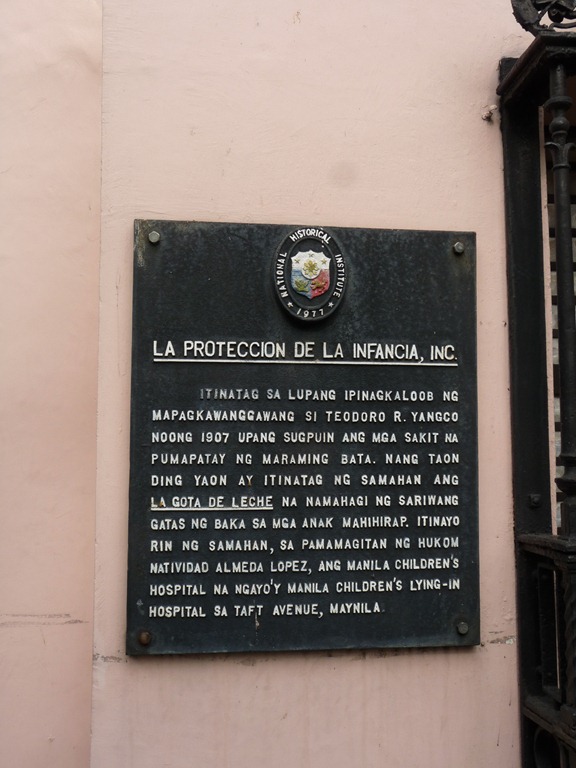
The story behind this building began in 1905, (some sources however say it’s 1907) when industrialist and philanthropist Teodoro Yangco and a group of women’s rights advocates (included among them would be the founder of Centro Escolar University, Librada Avelino) founded the La Proteccion de la Infancia, Inc., (LPI) considered to be the first and oldest non-sectarian charity organization in the country. Its aim was to look after the welfare of children at a time when child mortality, malnutrition, and other diseases were on alarmingly high rate. LPI decided to embark on a milk-feeding program for the children, as well as helping out their mothers as well.
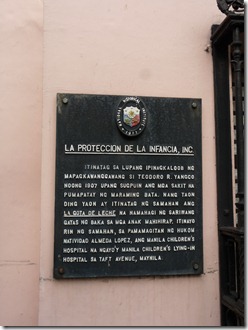
With its widening operations and expansion over the years, there came a need to move from its original home in Evangelista Street in Quiapo. Yangco donated a parcel of his land along Lepanto Street up in Sampaloc. The construction of its new office fell onto the hands of 2 architects, Arcadio Arellano and his younger brother Juan, who was fresh out of his architectural education in the US. The project one of the first ones the brothers would collaborrate on for the next 3 years. For Juan, this would be one of the first architectural projects he would take, as he would go to build more iconic landmarks ahead like the Post Office Building and the Metropolitan Theater, to name a few.