The American colonial period marked a period of growth for Manila to the point that it was becoming congested by the 1920s. As such, land developers began to look at the areas outside Manila’s (City of Manila’s to be specific) border to find potential areas for residential development.

One of these developers was Magdalena Hashim Ysmael-Hemady, a Lebanese-born entrepreneur and developer who, together with her husband Kemal Hemady, came across a vast hilly terrain east of the city in what was then San Juan. They managed to acquire the property and the area would be developed in the 1930s, known first as the Magdalena Estates and then eventually, New Manila.

New Manila would eventually become part of Quezon City when it was established in 1939. By that time up until the 1960s, the area was considered a prime address where many of country’s affluent families and influential personalities. Along its streets once stood residences that belonged to the likes of the Rectos, Cojuangcos (the Eduardo Sr. side), acresses like Charito Solis and Gloria Romero, politiicans like Lorenzo Tañada and Geronima Pecson. Even Pres. Manuel Quezon had a house in New Manila where he would stay to recuperate from his bouts with tuberculosis.

The urbanization and the growing population of Metro Manila as a whole from the 1970s onwards would mark a turning point in the story of New Manila as the massive mansions that used to dot the landscape were being torn down one by one in favor of multi-unit townhouses and apartments and towering condominium buildings. On one hand, it is nice to see these new developments that would alleviate somewhat the housing needs in the metropolis. But on the other hand, these came at the price of losing the colorful history of what New Manila once was as the grand character of these old houses were now gone.

Fortunately, there are some remaining old houses in the area of New Manila. The Urban Roamer was fortunate to check out three of them, each with their own story to tell.
re nou space (ralph nubla aNCESTRAL hOUSE)
Built around the 1950s, the house served as the residence of the family of Ralph Nubla, a Filipino buisnessman and industrialist who was notable for having led the group who took over the Philippine Bank of Communications in 1974. The family would eventually move out and the house remained abandoned for decades until around 2020 when the house was first utilized to be a parking facility for FIC (Fruits in Ice Cream), a business owned by another branch of the Nubla family. This led to a rediscovery of the house and its old charm by the family who would move to renovate and restore it to its former glory.
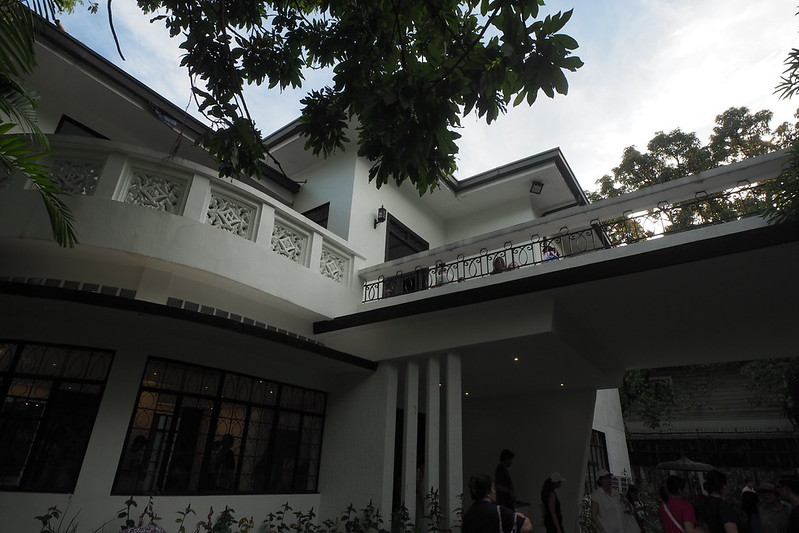
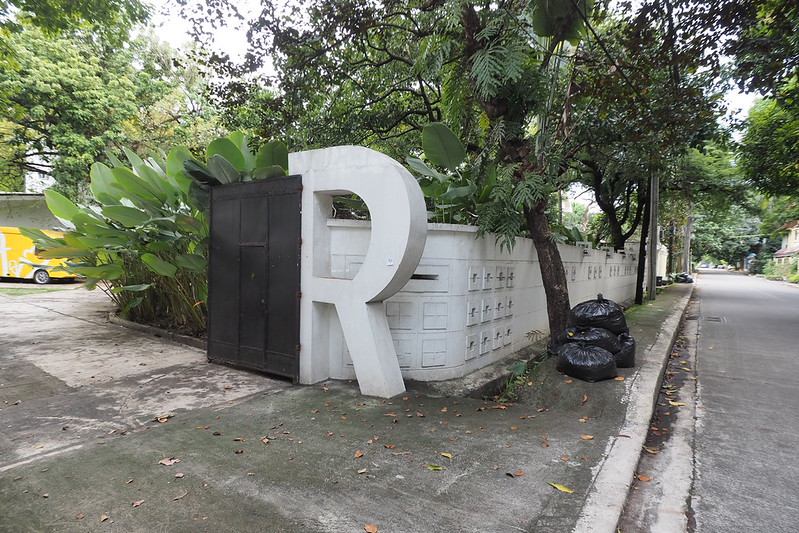
As a result of this restoration, the house was repurposed into an events and artist space, with indoor and outdoor spaces for activities and a large kitchen which can be rented out for culinary events. Many elements of the house remain intact, including the R and N initials found at the entrances, which used to symbolize the owner’s initials but are now repurposed as the initials for Re Nou.


As it stands, Re Nou Space/Ralph Nubla House is one of the few places where one can appreciate what old New Manila was like with all its grandeur while providing a renewed (pun intended) sense of purpose in inspiring the present and future generations in making the past come alive in new and interesting ways.
vILLA Caridad
Sadly, not all of the old houses were as fortunate as the Nubla house, at least those that managed to survive. The most notable (and “notorious” in various aspects) is the house known as Villa Caridad. Built in the 1930s, the house was designed by Architect Domingo Lerma in what is considered a “Viennese seccession” architectural style for a prominent dentist relative, Dr. Jose Lerma. In the 1950s, the house was then sold to Ambassador Manuel Viola Gallego who named the house Villa Caridad after his wife, Caridad Ongsiako.

At its heyday, the house was a favorite location spot for various films as its grand exterior and lavish interiors provided either a royal or affluent setting or a place that is mysterious or scary. It also boasted a vast garden which helped enhance the beauty of the house. Unfortunately, the house was sold in the 1990s, reportedly to a Filipino-Chinese businessman who had no intention of keeping the house. It is said that the owner originally intended to have the house demolished but it did not push through for some reason. So it was left to rot into the state that it is today, with its interiors already stripped out and some of the exterior details no longer present.

Today the house remains merely as a ghost of its former self as its appearance evokes a sense of dread and neglect. And as much as there is a desire to see the house restored, chances of that happening is unfortunately slim.

Doña Narcisa de Leon (Doña Sisang) aNCESTRAL House
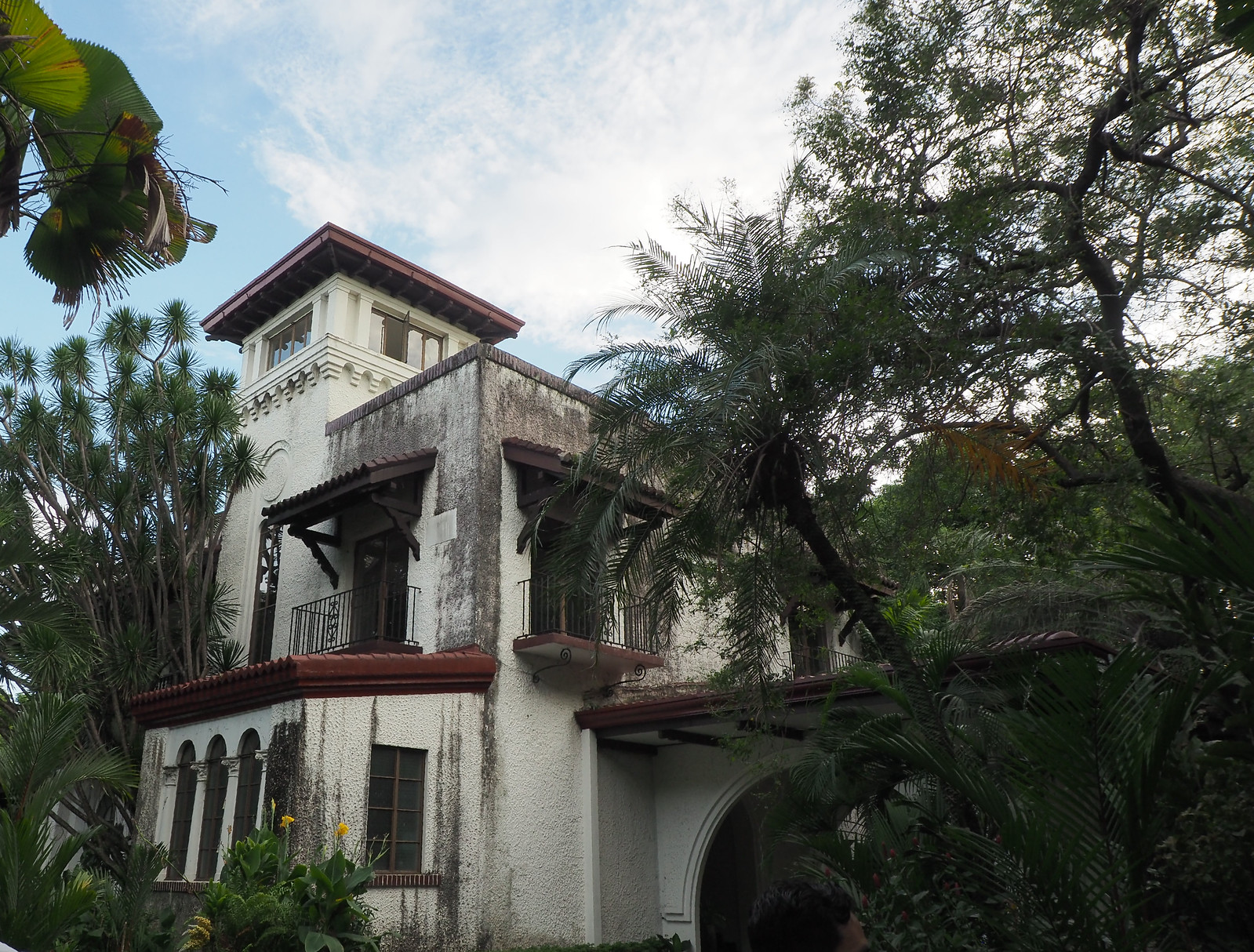
Finally, there is the house that once belonged to one of the pillars of the Philippine film industry, Doña Narcisa de Leon, fondly called Doña Sisang, the cofounder of one of the most influential movie studios in the country: LVN Pictures.

Built in 1931, the house was designed in the “mission revival” style which was in vogue during that period. It was designed by National Artist for Architecture Pablo Antonio, who also designed many of the buildings in the Far Eastern University campus. The house originally served as a residence for Doña Sisang and her growing family but when she helped start LVN Pictures in 1938, the house would also serve a second and important purpose, a location for many of LVN’s films, a testament to Doña Sisang’s hands-on approach in LVN rather than just being running the business side of the studio.

Even as LVN declined in the 1960s, the house remained a favored filming location for many movie and, increasingly, television productions. While the family of Doña Sisang no longer hold residence there, they were keen to preserve the house, partly for the continued utilization of the house for various productions (which I would assume provides revenue) and, perhaps, to serve as a living monument to the legacy of Doña Sisang, LVN Pictures, and the Philippine film industry as a whole.

But because of the constant use of the Doña Narcisa de Leon house for film and TV productions, the house is not usually open to the public and in the rare instances that it is open, chances are one cannot get to see the house from the inside. Still it is great to see such a preserved landmark in New Manila to remind people of what the area once was.

Here’s hoping that these houses still manage to survive as New Manila continues to evolve. Andfor Villa Caridad to get a new lease of life like the two other houses are enjoying.

A big thanks to Jing Ordoña of Manilakad Tours for organizing a tour of New Manila last October 31, 2026, which made possible for the Urban Roamer to visit these three houses, as well as other places that will be featured here soon. If you want to join a possible future New Manila tour or any of his other tours, contact Jing on Facebook.
Acknowledgements as well to Lakbay ng Lakan, Wikipedia, Mega Asia, Ancestral Houses in the Philippines on Facebook, Mighty Magulang on Facebook, Archivo 1984, and Nomadic Experiences
See these places on The Urban Roamer's Map