Continuing the journey to the Tamaraw’s abode

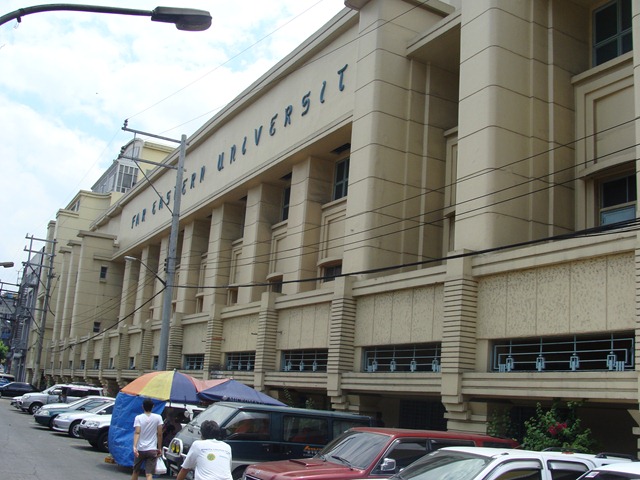
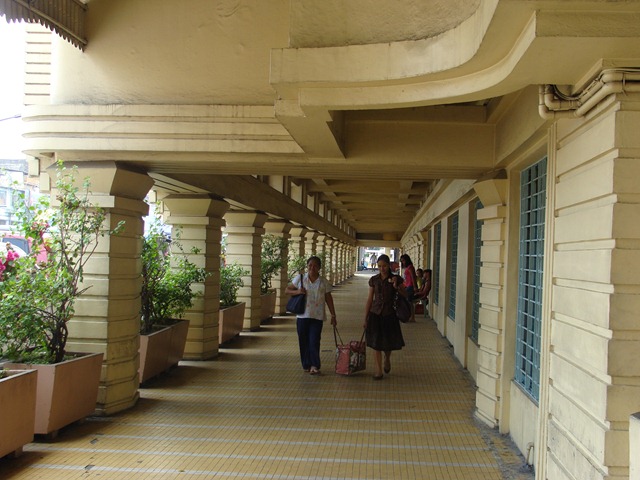
At the western end of the Far Eastern University Manila campus is what can be perhaps called the flagship building and the oldest in the campus: the Nicanor Reyes Hall, named of course after the founder of the university. It also represented best the campus’s Art Deco flavor with its grandiose facade that is still intact in the face of the city’s changing landscape. Designed by National Artist Pablo Antonio and completed in 1939, it also has arcade walkways that are common among many buildings along Recto Avenue and Quezon Blvd. where it is situated.
DSC06580

DSC06578

Read more

A journey to the abode of the Tamaraws

No we will not be going to Mindoro for this one. (0therwise, this blog will not be called the Urban Roamer)

I am actually referring here to the Tamaraws as the team monicker of that university based in Manila’s University Belt known as the Far Eastern University or FEU for short.

Art-Deco influenced “FEU” mark at the campus gates
DSC06555
FEU logo originally designed by Galo Ocampo

First of all though, let me disclose that I have never been a student, not even a cross-enrollee, of FEU, though I did entertain the possibility of studying there at one point. Nevertheless, the things I’ve heard about the rich heritage of the campus along Nicanor Reyes St. and Quezon Blvd. is something I wanted to check out for myself. So thanks again to my suki travel guide friend Lawrence Chan, I got the opportunity to see FEU and the heritage it treasures up close. (to students and alumni of other schools, don’t worry; I will feature or visit your school at some point in the future)

Read more

Meet the Met (again)

This is not some grammatical anomaly there. I am referring here to the grand old dame of Philippine theaters: the one we affectionately call “The Met” or The Manila Metropolitan Theater.

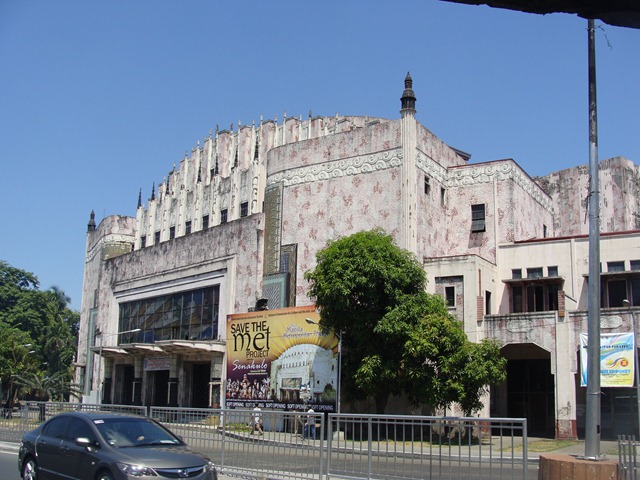
DSC06867

Located near the foot of Quezon Bridge in the corner of old Arroceros, (now known as A. Villegas St.) this iconic landmark was built in an area that was once part of Manila’s first botanical garden in the late 1920’s and was opened on December 10, 1931. It is one of the few remaining structures in the metropolis that follows the architectural style known as Art Deco, one of the most popular architectural designs of the period. It was designed by Juan Arellano, who also happens to be the architect of the Manila Central Post Office and the Jones Bridge; the area where these works are located is known as the “Arellano Triangle.”

Read more

reminiscing the Insular Ice Plant

At this time when we in the metropolis are suffering from the effects of El Niño and temperatures reaching as to as high as almost 37 degrees Celsius, this urban roamer cannot help but look back at a time when there was such a thing as a literally cool spot in Manila where perhaps we can take refuge from all the heat. I’m referring to none other than the Insular Ice Plant.

the Insular Ice Plant (courtesy of the Metropolitan Museum of Manila)

Back in the days when refrigerators either were non-existent or not widely used yet, the Insular Ice Plant was one of the first buildings built by the Americans to keep the steak and beer fresh and cold. Designed by Edgar Bourne, it was a well-built building and it had a towering smokestack that was a landmark of sorts of Manila for many years,  just near the  southern end of the Puente de Colgante, then eventually the Quezon Bridge, right across the Post Office Building, Jones Bridge, and the Metropolitan Theater.

Read more